
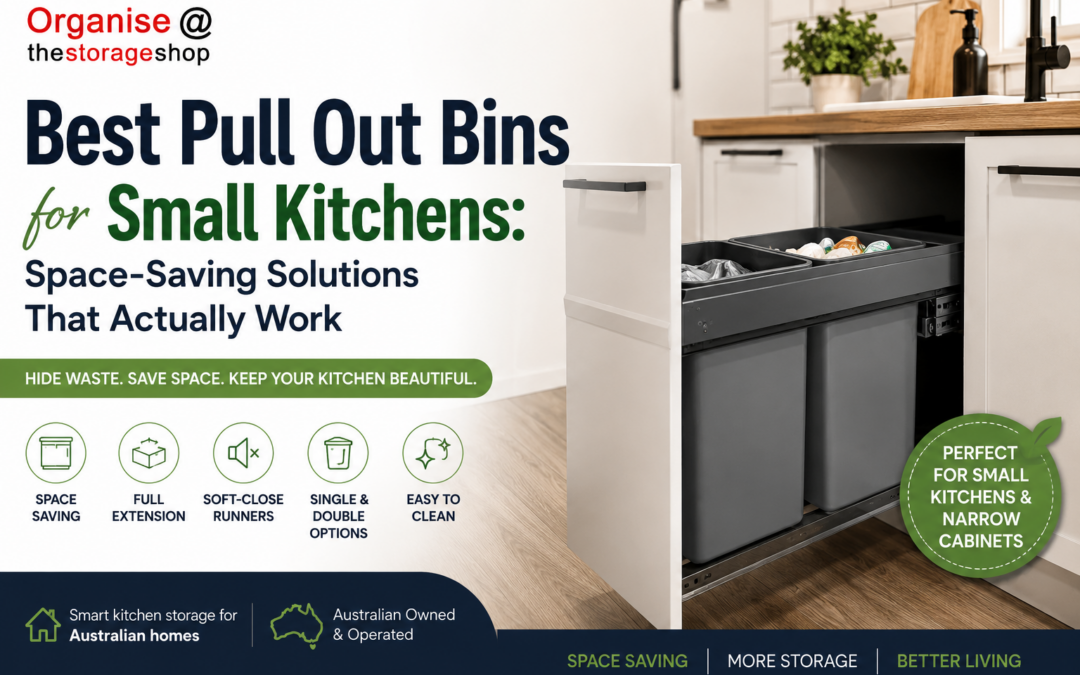
A small kitchen can be lovely to cook in, but only when every centimetre earns its place. When the bench fills up by mid-morning, the cabinets are narrow and there’s one clear path through the room, a freestanding rubbish bin stops being furniture and becomes an obstacle. It sits in the way, holds onto smells, and quietly makes a tidy kitchen look cluttered.
A pull out bin solves the floor-space problem by moving the bin inside a cabinet, where it slides out when you need it and disappears when you don’t. But in a compact kitchen the win isn’t automatic. Choose the wrong size and you’ve just traded a bin you trip over for a cabinet you can no longer use for anything else.
This guide is written for that exact situation — a genuinely small kitchen where space, not budget, is the limit. We’ll cover how to size a bin when there’s no room to spare, three specific models that suit narrow cabinets, where to put it, and the mistakes that quietly cost you storage.
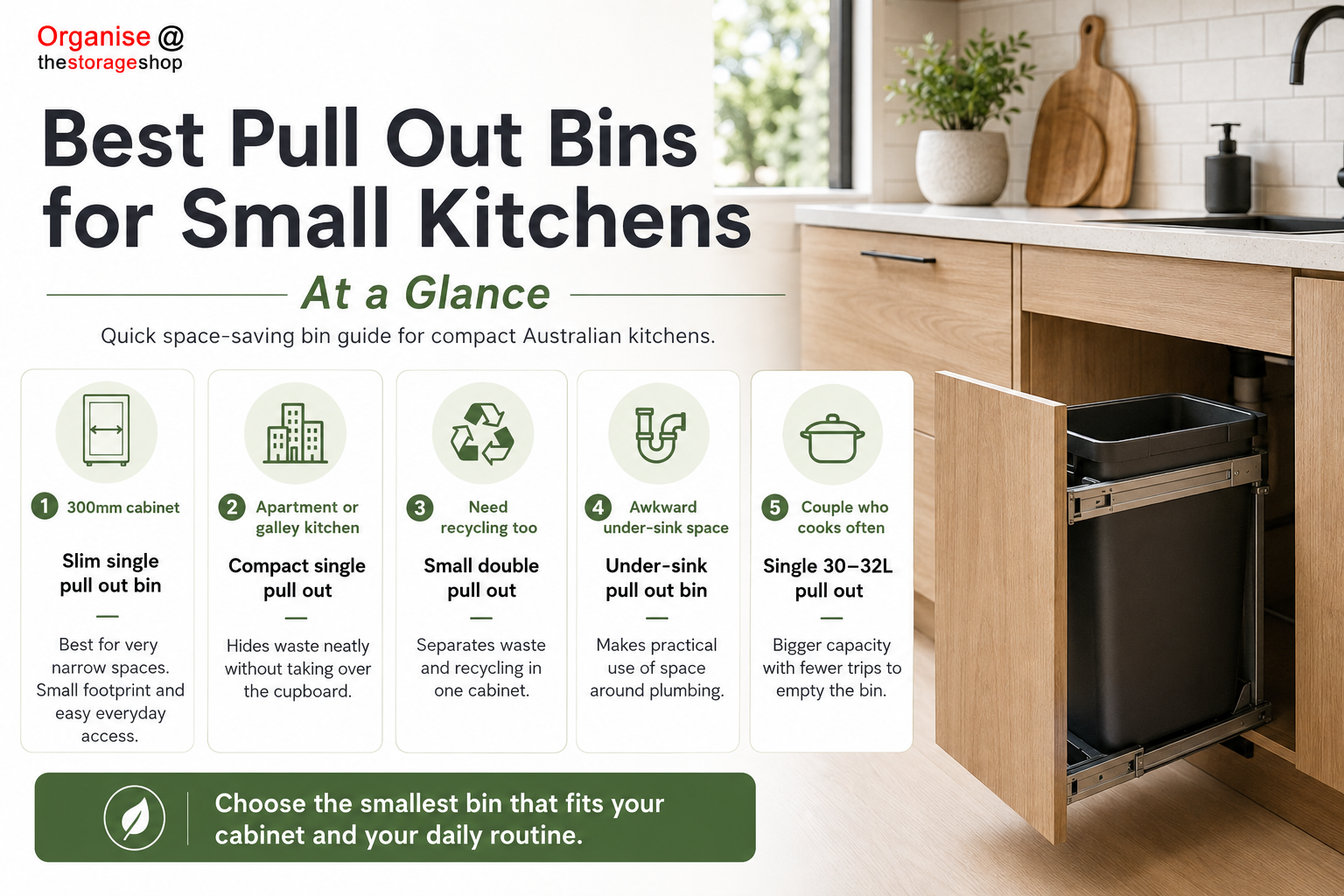
Best pull out bins for small kitchens at a glance
| Your situation | Best pull out option | Why it works |
| Very narrow cabinet (300mm) | Slim single pull out bin | Smallest footprint, still fully accessible |
| Apartment or galley kitchen | Compact single pull out | Hides waste without claiming a whole cupboard |
| You recycle indoors | Small double pull out | Splits waste and recycling in one cabinet |
| Awkward under-sink space | Under-sink pull out bin | Uses the dead space around your plumbing |
| Couple who cooks often | Single 30–32L pull out | Fewer trips to the outside bin, one bucket |
Looking for a compact bin that fits your cabinet? Browse our kitchen bins range — including pull out bins, under sink bins, cupboard bins and door mounted options for Australian kitchens.
Why a small kitchen needs a different bin strategy
In a small kitchen, bin capacity and storage are fighting over the same few litres of cabinet space — so the goal isn’t the biggest bin you can fit, it’s the smallest bin that still gets you through a normal day.
That’s the part most bin advice skips. In a large kitchen you can run a generous double or triple system because losing one base cabinet barely registers. In a compact kitchen, that same cabinet might be the only home for your pots, your recycling, or the appliances that fit nowhere else. So the real question isn’t “how much rubbish do we make?” — it’s “how little bin can we get away with, and what do we keep in return?”
For most one- or two-person households, a single compact bin emptied a couple of times a week is plenty. The moment you size up “just in case,” you’re trading a cupboard you’ll miss for capacity you rarely use. Small-kitchen waste is a subtraction problem, not an addition one.
How to size a pull out bin when space is tight
Match the bin to your cabinet width first. Australian base cabinets are usually built in 300mm, 400mm, 450mm and 600mm widths, and in a small kitchen you’re almost always at the narrow end of that range.
| Cabinet width | Best bin for a small kitchen | Realistic capacity |
| 300mm | Slim single pull out | 12–15L |
| 400mm | Compact single | 15–32L |
| 450mm | Compact single or small double | 32L, or 2 × small |
| 600mm+ | Not really space-limited — see the full roundup |
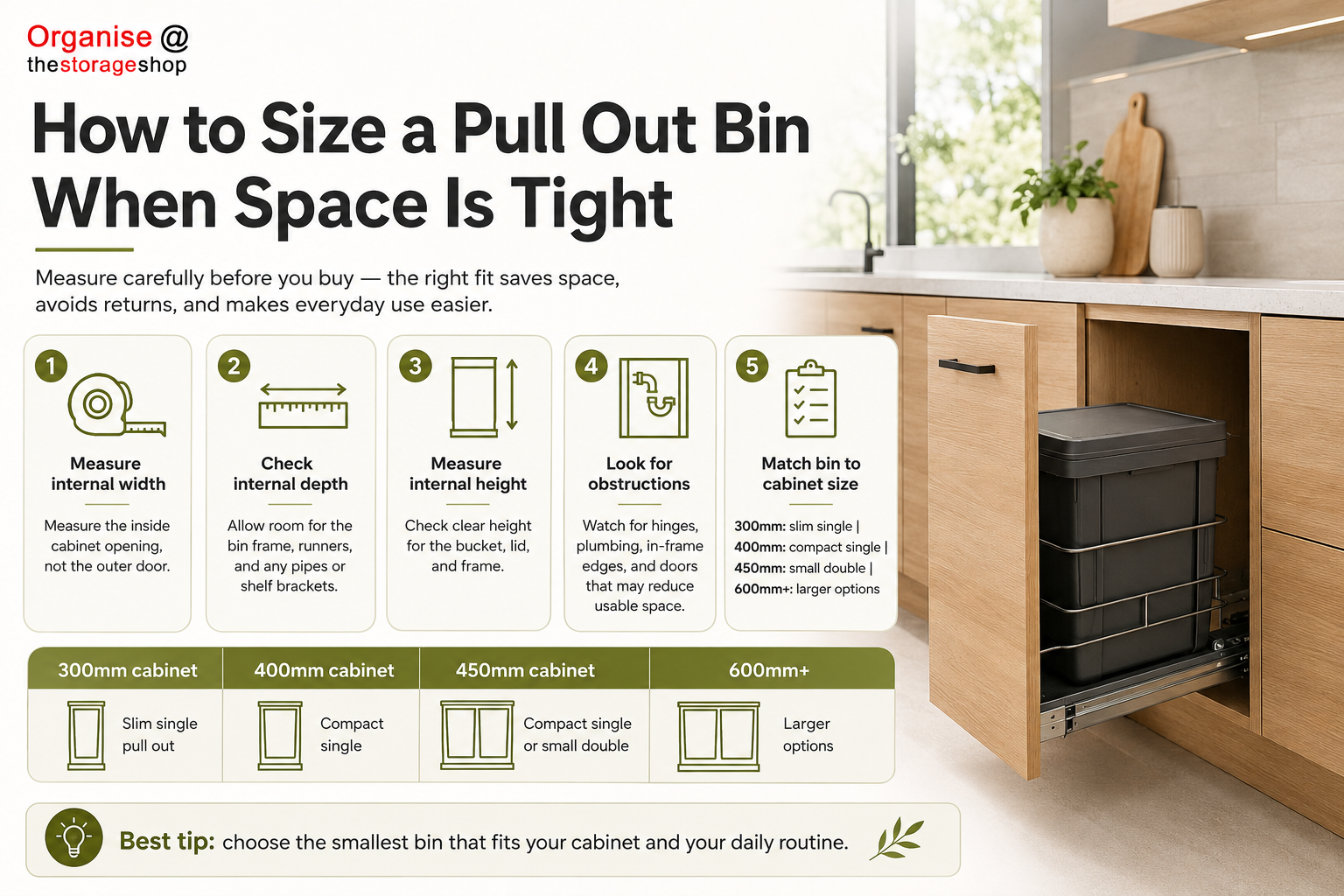
Treat the litre figures as a guide and always check the dimensions on the product listing, because the frame and runners take a few millimetres off every side.
Before you order anything, measure properly — it takes two minutes and saves a return:
- Internal width of the cabinet opening — the gap the bin actually travels through, not the door.
- Internal depth, front to back, noting anything that intrudes like a waste pipe or shelf bracket.
- Internal height available for the bin and its frame.
- In-frame check. If there’s a visible timber or MDF border around the inside of the opening, subtract about 30–50mm from your width — that frame narrows the gap.
- Runner clearance. Pull out bins extend on slides, so make sure the mechanism can open fully without catching the shelf above.
For the full breakdown by every cabinet size, our pull out bin sizes and cabinet width guide goes deeper than we can here. And if your measurements reveal your kitchen isn’t as tight as you feared, the wider range is in our guide to the best pull out kitchen bins for every cabinet type and budget.
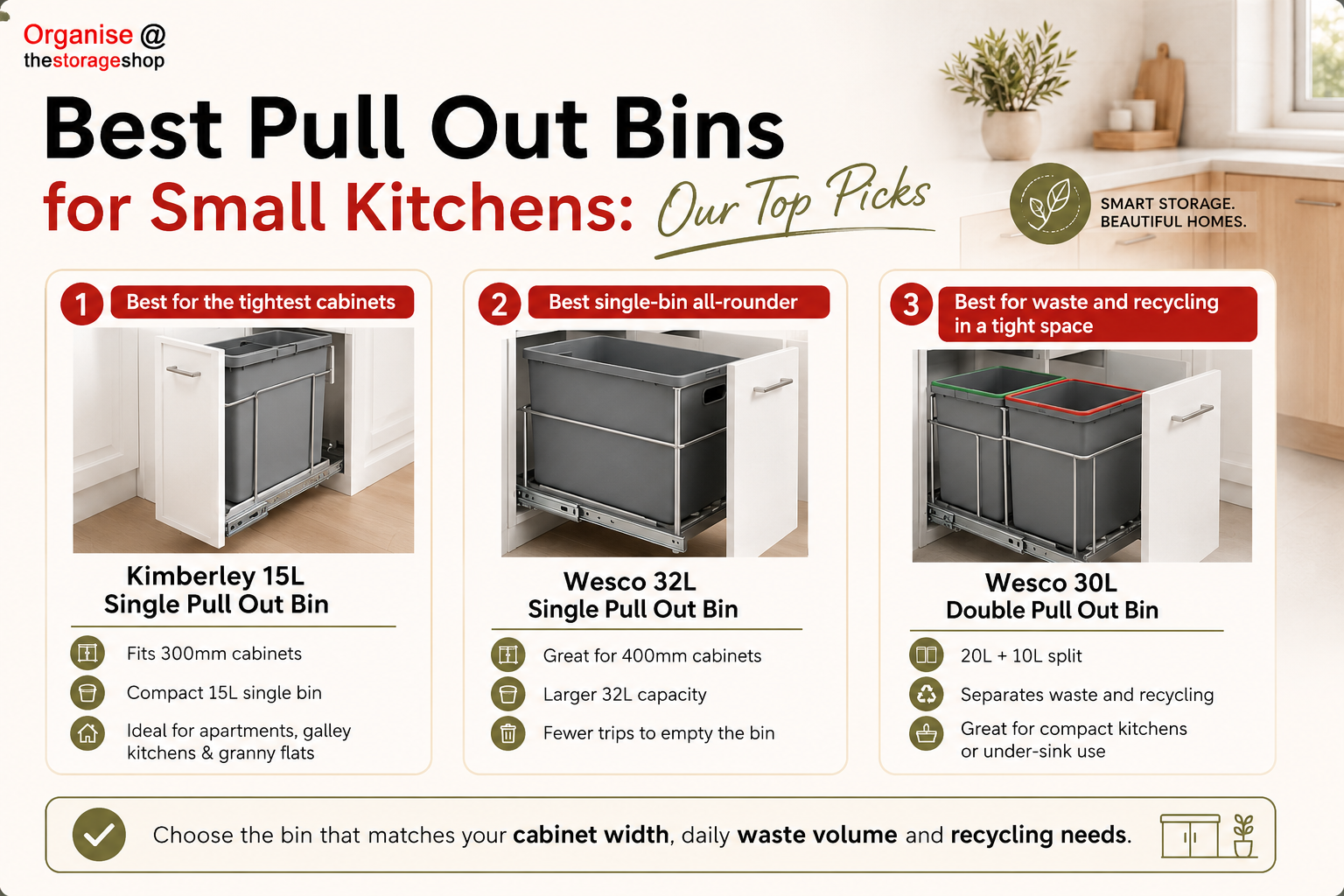
Best Pull Out Bins for Small Kitchens: Our Top Picks
These three earn their place because they fit narrow cabinets without forcing a compromise you’ll regret. Each suits a slightly different small-kitchen situation, so read the trade-offs, not just the headline.
Best for the tightest cabinets — Kimberley 15L Single Pull Out Bin
For a 300mm cabinet — the kind you find in apartments, galley kitchens and granny flats — this is the natural fit. It’s a compact single bin on full-extension ball-bearing slides, so the small bucket still pulls all the way clear for emptying, with a frame that mounts to the cabinet base. Best for one person or a couple who handle recycling elsewhere.
The honest trade-off: 15L fills fast if you cook from scratch nightly, so expect to empty it two or three times a week. That’s the cost of keeping the rest of the cabinet usable.
Best single-bin all-rounder — Wesco 32L Single Pull Out Bin
With a 400mm cabinet and a wish for maximum capacity from one slim bin, the Wesco 32L is the sweet spot. It’s base-mounted on full-extension runners with a flip-top lid for hands-free loading mid-cook. The bigger single bucket means fewer trips outside without committing to a double.
The honest trade-off: one compartment, so if you’re serious about separating recycling you’ll need a second spot for it — rarely an issue for a small household that recycles via the kerbside bin.
Best for waste and recycling in a tight space — Wesco 30L Double Pull Out Bin
Want to separate recycling without a wide cabinet? This double splits 30L into a 20L and a 10L bucket on a floor-mounted frame, and it’s designed to door-mount inside an under-sink cabinet — so it claims space you’re probably wasting already. Both buckets pull out on full-extension runners for easy bag changes.
The honest trade-off: the 10L recycling side fills quickly, especially with bottles and boxes, so it suits homes whose recycling is mostly light packaging.
Single or double pull out bin in a small kitchen?
In a small kitchen, choose a single bin if you want to keep the most cabinet space, and a compact double only if separating recycling indoors genuinely matters to you.
Go single if your cabinet is narrow, your household is small, or you already recycle through a kerbside bin. Go double if you cook regularly, recycle indoors, and have a cabinet wide enough for two buckets to sit comfortably. A double is only worth it when it fits without strain — forced into a too-narrow cabinet, a single bin you can actually open beats a cramped double every time.
Under Sink Pull Out Bin or Base Cabinet Bin: Which Works Better?
In a small kitchen, the under-sink cabinet is usually the smartest home for a bin, because the space around the plumbing rarely suits anything else. Slim under-sink bins are built to sit around the waste pipe and U-bend, turning dead space into a waste station while every other cupboard stays free. Kitchen designers often make the same point: when a kitchen is genuinely tight, a bin inside the sink cabinet is frequently the only practical pull-out option.
Two practical notes. Measure from the cabinet floor to the underside of the sink basin, not the benchtop — the bowl steals height you might be counting on. And one regional point worth checking: In Western Australia, food waste disposal unit rules can be different from other states, so it is worth checking local requirements before planning one. For many small kitchens, an under-sink bin is still the simpler and more practical option.
Pull out bin vs freestanding bin for a small kitchen
For most small kitchens a pull out bin is the better long-term choice, because it removes the bin from view and from the floor — the two things a compact kitchen needs most.
| Feature | Pull out bin | Freestanding bin |
| Saves floor space | Yes | No |
| Keeps rubbish hidden | Yes | No |
| Helps a small kitchen feel open | Yes | Rarely |
| Easy to clean around | Yes | Often awkward |
| No installation needed | No | Yes |
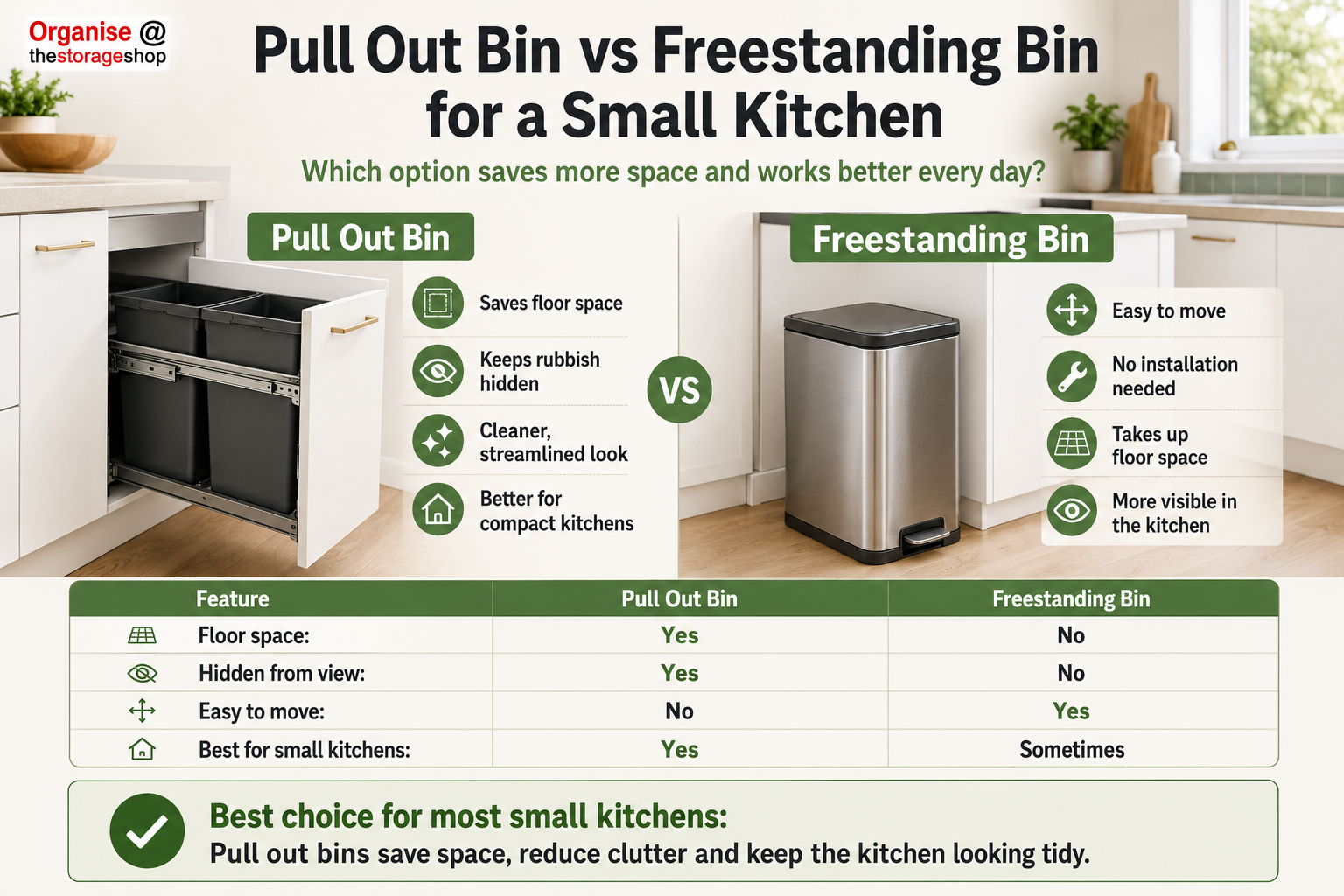
A freestanding bin is easy to buy and move, which is its one real advantage. But in a tight kitchen that convenience comes at the cost of floor space and a cluttered look — the trade most small-kitchen owners would rather not make.
Small-kitchen mistakes that quietly waste the space you have
The most common reason a bin disappoints in a small kitchen isn’t the bin — it’s where and how it’s fitted. Avoid these and the room will feel noticeably bigger:
- Oversizing for peace of mind. A bin bigger than your daily need permanently borrows cabinet space to solve a once-a-week problem. Size for the everyday, not the dinner party.
- Forgetting the in-frame deduction. Skip the 30–50mm an in-frame cabinet steals and the bin won’t clear the opening — leaving a unit that scrapes or won’t close.
- Ignoring the hinges and pipes. Door hinges eat usable width, and under-sink plumbing eats depth. Both stop a bin sliding cleanly if you don’t check them first.
- Blocking your own walkway. Pull out kitchen bins need room to open. In a galley kitchen, a bin that swings into the only path through the room is a daily irritation — fit it where the open bin won’t block movement.
- Putting the bin where you stand. The cabinet directly under the sink or cooktop is where you plant your feet to work. Shift the bin one cabinet to the side so you’re not stepping back every time.
Features worth paying for in a small kitchen
When space is tight, a few details make daily use noticeably better:
- Full-extension runners — the bin slides completely clear of the cabinet, so a small bucket is still easy to reach and line.
- Soft-close — stops the slamming, which matters more in open-plan homes where the kitchen opens onto living space.
- Removable buckets — lift them out to empty and wash properly, which keeps a hard-working small-kitchen bin hygienic.
What you can usually skip in a compact kitchen: triple-compartment systems and very large capacities. They’re built for big cabinets and big households, and in a small kitchen they cost you more storage than they’re worth.
Once the bin’s sorted, finish the rest of your small kitchen
A pull out bin is one move in a bigger space-saving game. The fastest follow-up win in a compact kitchen is usually the drawers — getting cutlery, utensils and tools organised so nothing is buried or wasted. If that’s your next job, our complete guide to drawer organisers, cutlery trays and inserts shows how to make every drawer pull its weight. When the bin, drawers and cabinets work together, even a small kitchen feels more spacious.
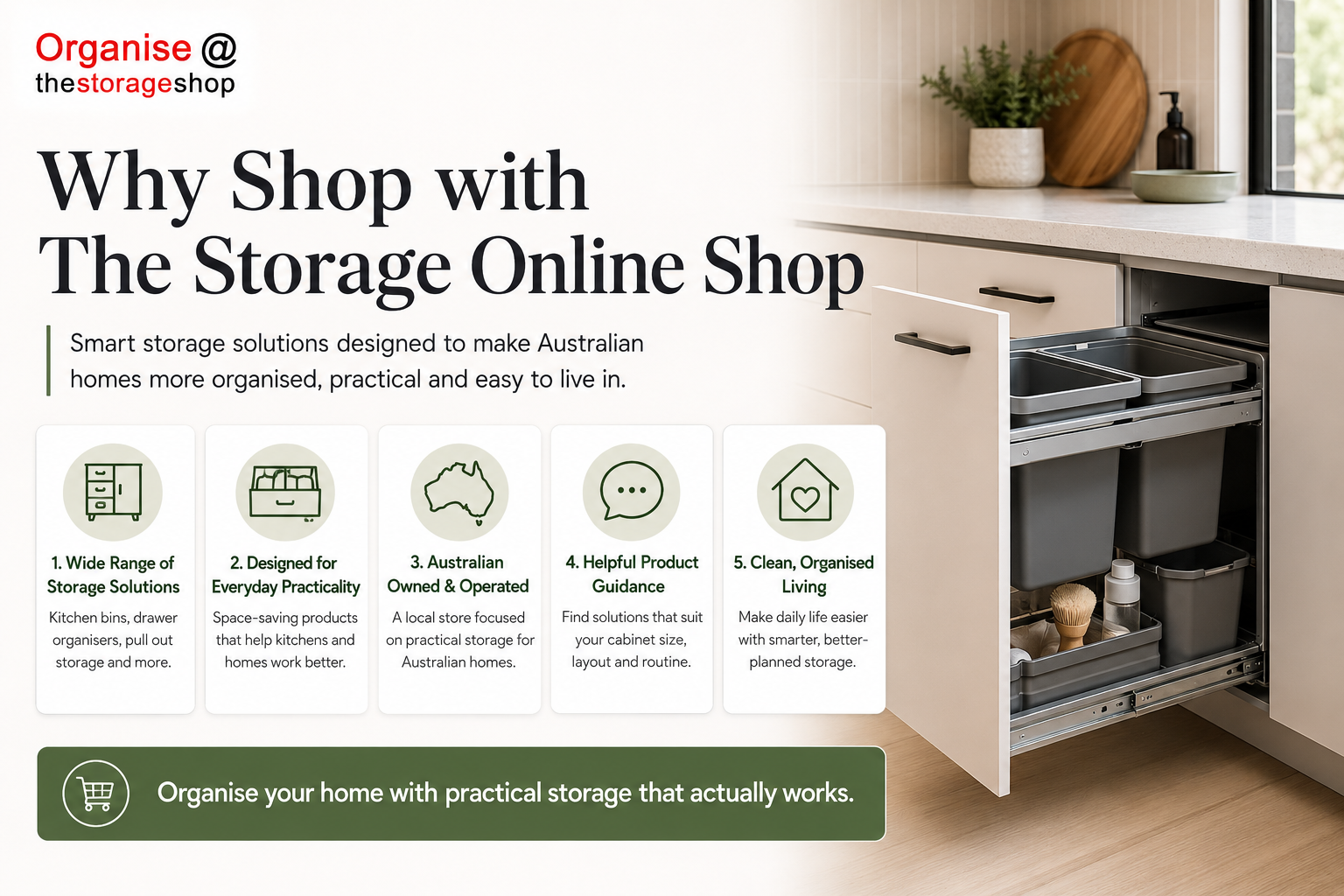
Why shop with The Storage Online Shop
Rather than buying a bin and hoping it fits, you can choose from pull out, under-sink, cupboard and door-mounted bins sized for standard Australian cabinets, with dimensions and installation notes on every listing. Many pull out bins are straightforward to install with basic tools, depending on the cabinet and product type, and free shipping applies on orders over $200 to most Australian states. Browse the full kitchen bins range to find a space-saving fit for your cabinet.
About The Storage Online Shop
The Storage Online Shop is an Australian-owned online store focused on practical home and kitchen storage solutions. The range is designed for people who want to make everyday spaces more organised, easier to use and less cluttered without overcomplicating the process.
For kitchens, The Storage Online Shop offers a wide selection of storage products, including pull out bins, under sink bins, cupboard bins, door mounted bins, drawer organisers, cutlery trays, pantry storage solutions and other space-saving accessories. These products are especially useful for Australian homes where cabinet space, kitchen layout and daily convenience all matter.
Whether you are renovating a kitchen, upgrading a compact apartment, replacing a freestanding rubbish bin or simply trying to make better use of your existing cabinets, The Storage Online Shop helps you find storage solutions that suit real homes and everyday routines.
Frequently asked questions
What size pull out bin is best for a small kitchen?
For most small kitchens, a 12–15L single suits a 300mm cabinet and a 15–32L single suits a 400mm cabinet. Pick the capacity that matches your cabinet width and daily rubbish rather than the largest bin that technically fits — oversized bins waste the storage small kitchens depend on.
What’s the smallest pull out bin you can get?
Compact single pull out bins start around 12–15L, ideal for one- or two-person households and the narrow 300mm cabinets common in apartments and galley kitchens. The Kimberley 15L is a good example of a slim single unit at this size.
Can I install a pull out bin under the sink with plumbing in the way?
Yes — slim under-sink models are designed to fit around the waste pipe and U-bend. Measure from the cabinet floor to the underside of the sink basin for height, and check the depth in front of the pipes before ordering, since these dimensions are tighter than a standard base cabinet.
Single or double pull out bin for a small kitchen?
Choose a single if you recycle externally or have a second bin elsewhere, and a compact double only if separating recycling indoors matters to you. In a small kitchen a single keeps more of the cabinet usable, while a small double like a 20L + 10L setup adds recycling without needing a wide cabinet.
Is a pull out bin better than a freestanding bin in a small kitchen?
For most small kitchens, yes. A pull out bin saves floor space, hides rubbish from view and helps the room feel less crowded. A freestanding bin is easier to move and needs no installation, but it takes up visible space a compact kitchen can’t spare.
What should I measure before buying a pull out bin?
Measure the internal cabinet width, depth and height, and check the hinge position and door clearance. For an in-frame cabinet, subtract 30–50mm from the width. For under-sink bins, also measure around the sink bowl and pipes, as these are the tightest constraints.
Are pull out bins suitable for apartments?
Yes. Pull out bins are ideal for apartments because they keep rubbish hidden, free up floor space and help a compact kitchen feel more open. A slim single or an under-sink model usually works best where cabinets are limited.
Free shipping on orders over $200 to most Australian states. Not sure which bin matches your cabinet? Browse the full kitchen bins range or get in touch — we’ll help you choose a bin that suits your cabinet size, kitchen layout and daily waste routine.
Final Conclusion
A small kitchen does not need a large bin to work well — it needs the right bin in the right place. The best pull out bin is the one that fits your cabinet, suits your daily waste routine and helps you keep the kitchen clear without giving up valuable storage.
For very narrow cabinets, a slim 12–15L single pull out bin is usually the smartest choice. For 400mm cabinets, a compact single bin gives you more capacity without taking over the cupboard. If you want to separate rubbish and recycling, a small double pull out bin can work well, as long as your cabinet has enough width, depth and clearance.
Before choosing, always measure the inside of the cabinet, check for hinges, pipes and frame edges, and think about how often you cook and empty the bin. In a small kitchen, the goal is not to fit the biggest bin possible — it is to choose a space-saving bin that makes everyday use easier.
Explore The Storage Online Shop’s kitchen bins range to find pull out bins, under sink bins, cupboard bins and door mounted options designed to help Australian kitchens stay cleaner, smarter and better organised.