
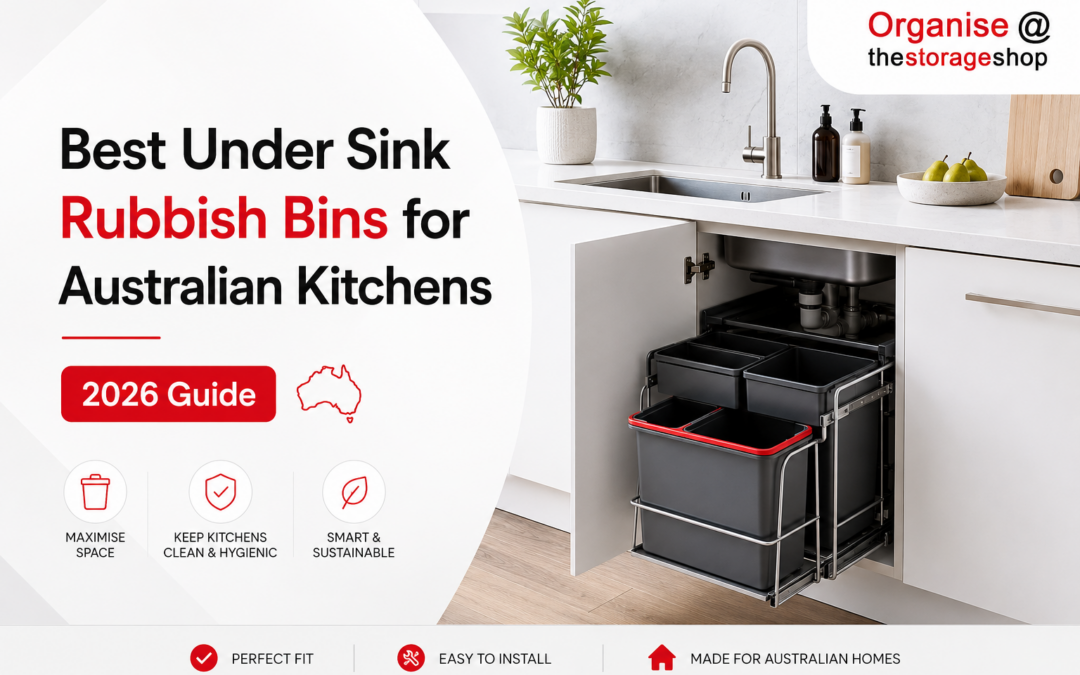
The cupboard under the kitchen sink is the most popular place to hide a rubbish bin — and quietly the most frustrating one to fit. Between the waste trap, the S-bend and the half-used bottles of dishwashing liquid already crowding the space, plenty of bins simply won’t sit there. This guide walks through the under sink rubbish bins that genuinely work in Australian kitchens, matched to your cabinet width, your household and your budget, so you can stop nudging a freestanding bin around the floor and finally reclaim that corner of the room.
Everything below is grouped by bin type, with a clear best pick for each and measurements in millimetres so you can check what fits before you buy.
Quick answer: which under-sink bin is best?
For most Australian households, a double pull-out bin around 64 litres is the best under-sink choice — it slides out to you, hides behind the cabinet door, and lets you split general waste and recycling in one tidy system. Renters and small kitchens are usually better off with a door-mounted or slimline bin, while a soft-close drawer system suits a renovation. Whatever you pick, measure your cabinet’s internal width, depth, height and plumbing clearance first.
Why the cupboard under your sink is trickier than it looks
An under-sink bin has to fit around the plumbing, not just inside the cabinet. The waste trap and pipework usually swallow the back third of the cupboard, so the genuinely usable space is shallower and more awkward than the cabinet door suggests. A bin that slides happily into a pantry cabinet will often jam against the pipes here.
Three things work against you in this spot: the plumbing eats depth and sits at an odd height, you’re frequently sharing the cupboard with cleaning products, and the door’s hinges and swing limit what you can hang on the inside of it. None of this rules out an under-sink bin — it just means the type and the size matter more here than anywhere else in the kitchen. Measure first (there’s a five-step method below) and you’ll dodge the classic mistake of buying a bin that’s 20mm too wide to close the door.
The four types of under-sink bins (and who each one suits)
There are four practical ways to put a bin under your sink: door-mounted swing-out bins, slimline freestanding bins, base-mounted pull-out bins, and soft-close drawer systems. The right one comes down to whether you rent or own, how much waste your household makes, and whether you separate recycling and food scraps.
Door-mounted (swing-out) bins — best for renters and awkward cupboards
Door-mounted bins clip to the inside face of the cupboard door and swing out as you open it. Because they sit high in the cupboard, clear of the pipework, and usually fit without drilling into the cabinet base, they’re a favourite for renters and anyone with a heavily plumbed cabinet. The trade-off is capacity: they typically hold 10–30 litres, so they suit smaller households, apartments, or a second recycling bin rather than a busy family’s main bin.
Slimline and freestanding bins that tuck under — best for flexibility and budget
If you’d rather not install anything, a tall narrow bin or a low-profile waste bucket that simply slides into the cupboard is the cheapest, most flexible option. There’s nothing to mount, you can lift it straight out to reach a leaking pipe, and you can take it with you when you move. The downside is you’ll open the door and lift the lid by hand, and the bin can shuffle around as you rummage past it. Browse our kitchen bins range for freestanding, pull-out and under-sink options.
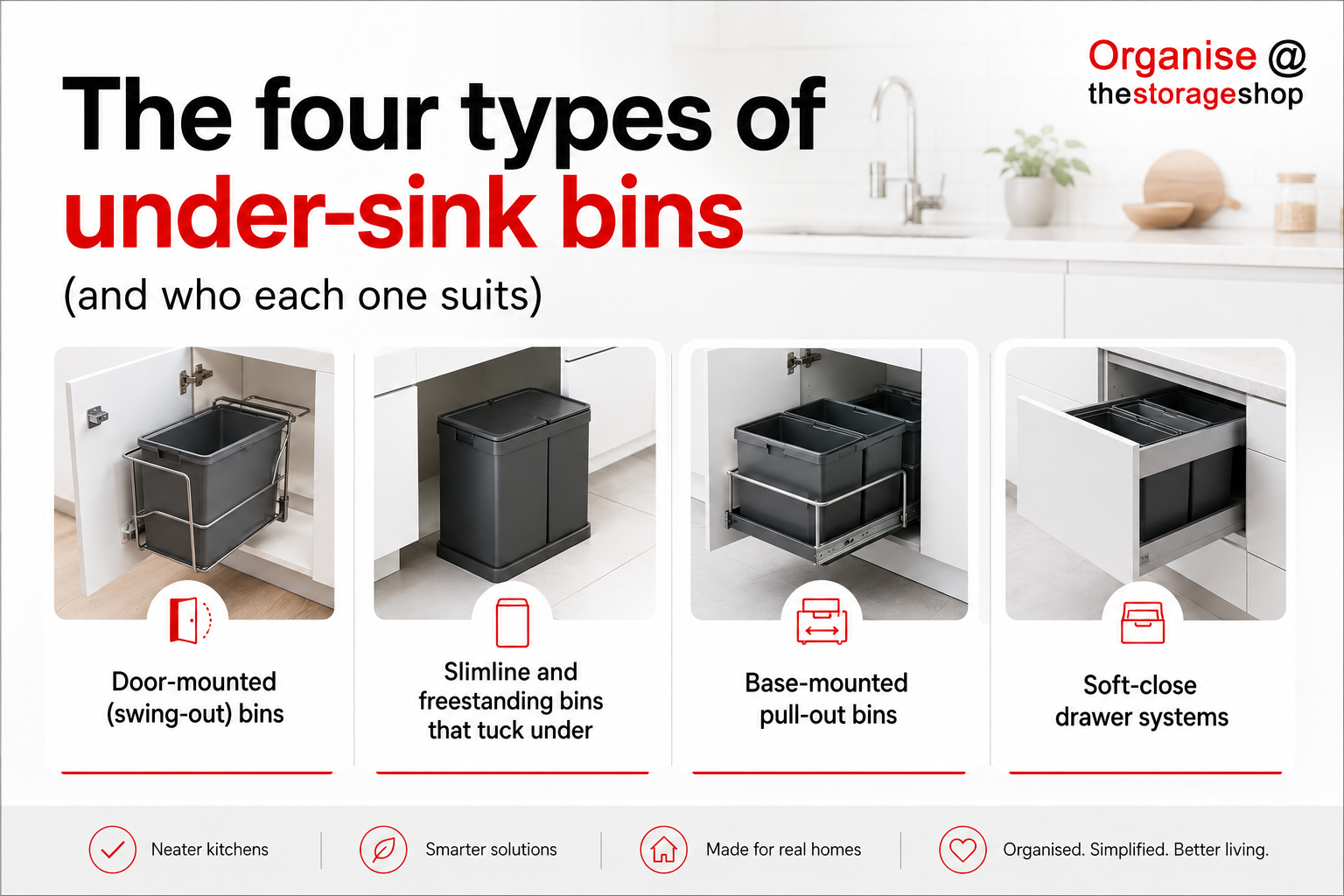
Base-mounted pull-out bins — best for everyday households (and the most popular)
A base-mounted pull-out fixes to the floor of the cupboard, and the whole bin glides out on runners the moment you open the door. One bucket or two, smells stay sealed inside the closed cupboard, and you never have to reach into a dark cabinet — these pull-out kitchen bins are where most Australian households land, and for good reason. If you want to compare pull-out bin options by cabinet type, capacity and budget, read our guide to the best pull-out kitchen bins in Australia.
Soft-close drawer systems — best for new kitchens and renovations
The premium end. These build the bin into a dedicated drawer running on high-end hardware (such as Blum runners with soft-close), so the whole thing glides out and closes itself silently, even fully loaded. They carry the most weight, hide completely behind a cabinet front, and almost always run two bins side by side. They cost more and are easiest to fit while the kitchen is already apart, so they make the most sense during a renovation or new build.
Under-sink bin comparison at a glance
| Bin Type | Typical Capacity | Fits Cabinet Width | Installation | Best For | From (AUD) |
| Door-mounted / swing-out | 10–30 L | 300–450 mm | Clips to door, minimal drilling | Renters, small or heavily plumbed cupboards | From ~$50 |
| Slimline / freestanding | 10–50 L | Flexible (it just slides in) | None | Budget and flexibility, easy pipe access | From ~$50 |
| Base-mounted pull-out | 20–64 L | 400–600 mm | Screws to cabinet floor | Everyday households, recycling split | From ~$130 |
| Soft-close drawer system | 20–84 L | 300–600 mm | Drawer installation (best during reno) | Renovations and premium kitchens | From ~$480 |
Capacities, widths and prices are indicative only — always measure your own cabinet and check the product page for current pricing before you buy.
Our best under-sink bins for 2026
Here are the bins we’d reach for first, grouped by what you actually need rather than ranked one to ten — because the “best” bin is the one that fits your cupboard and your household.
Best for recycling and FOGO: Wesco 64L Double Pull-Out Bin (W64)
Two 32-litre buckets sit side by side and pull out together, which makes this the easiest way to run general waste on one side and recycling (or food scraps) on the other without a second bin cluttering the floor. It’s built for a 600mm cabinet, glides out smoothly on its runners, and because the buckets lift out, they’re simple to rinse. Typically priced from around $280, it’s the workhorse most families settle on. See the Wesco 64L Double Pull-Out Bin for current pricing.
Best premium soft-close system: Blum TANDEMBOX bin drawers
If you’re renovating and want the bin to disappear behind a cabinet front and close itself in silence, this is the pick. The Blum TANDEMBOX drawer runs two bins on soft-close hardware rated to carry the load, with configurations to suit cabinets from 300mm (around 20L total) up to 600mm (around 84L total) — so you can match it to whatever gap you’ve got. Prices typically start from around $480 depending on size and configuration. Browse the soft-close options in the kitchen bins category.
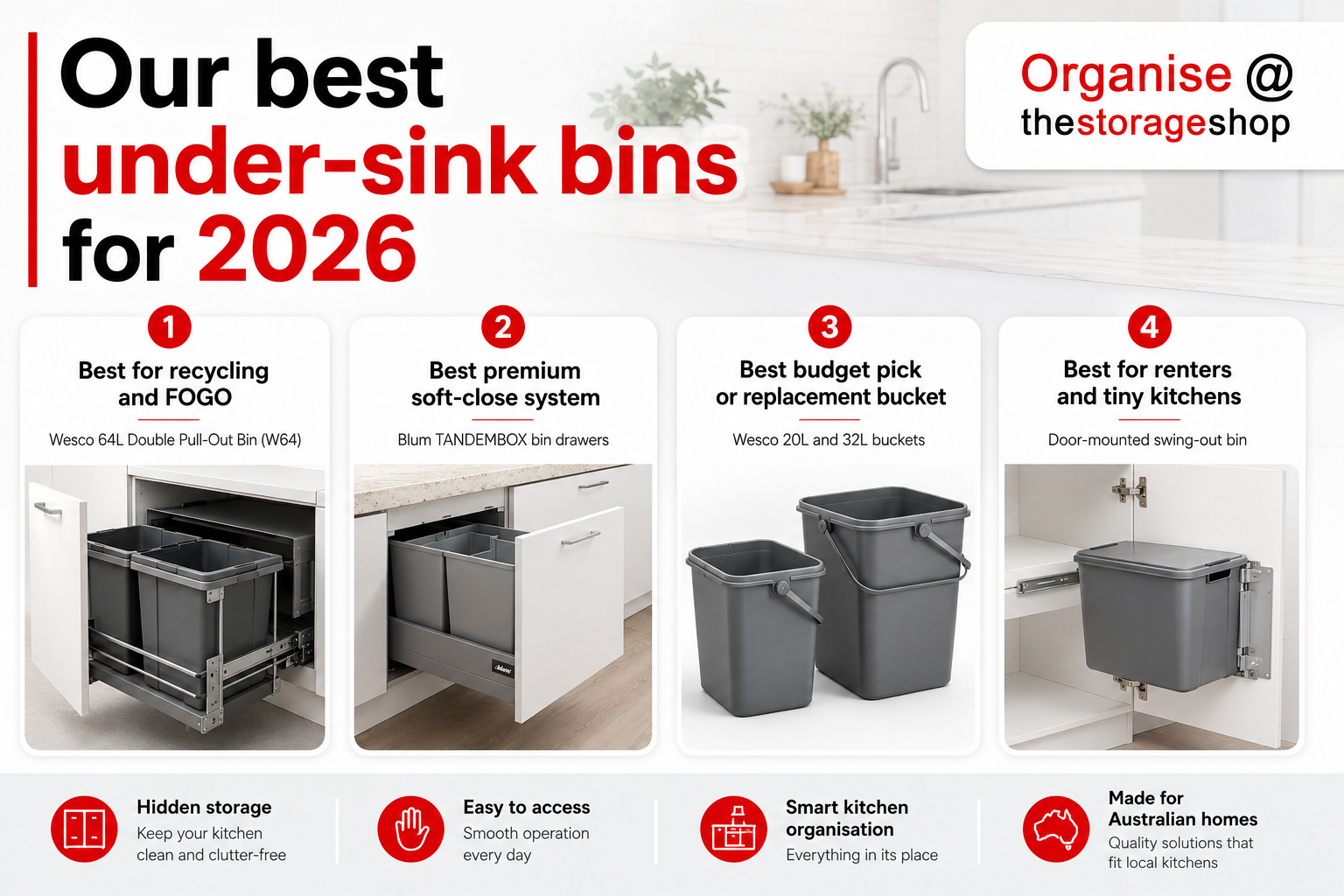
Best budget pick or replacement bucket: Wesco 20L and 32L buckets
Cracked the bucket on an existing pull-out, or building a simple under-sink setup from scratch? Wesco’s standalone buckets do the job without the hardware cost — the 20L bucket is typically from around $50 and the 32L bucket from around $74, though pricing may vary by size. They also make a tidy second bin for recycling tucked beside the main one.
Best for renters and tiny kitchens: door-mounted swing-out bin
When you can’t (or don’t want to) drill into the cabinet and floor space is precious, a door-mounted bin gives you a hidden bin with almost no commitment — it comes off the door cleanly when you leave. Pair it with a small benchtop caddy if your household makes more than it can hold. Explore the options in the kitchen bins range.
Product availability, pricing and specifications can change, so always check the product page for current details before ordering.
What size under-sink bin do you need?
Bigger isn’t always better. An oversized bin lets waste sit too long and turn smelly; an undersized one needs emptying constantly. Match the capacity to how many people use the kitchen and how often you cook:
| Household | Suggested Capacity | Suitable Bin Type |
| 1 person | 10–20 L | Compact single or door-mounted |
| 2 people | 20–30 L | Single or slim pull-out |
| 3–4 people | 30–40 L | Double under-sink bin |
| 4+ people | 40–64 L | Larger double pull-out |
| Recycling / FOGO household | 2+ compartments | Double or multi-compartment |
For a wider look at how bin sizes and types compare across the whole kitchen, see our overview of kitchen rubbish bin types and sizes.
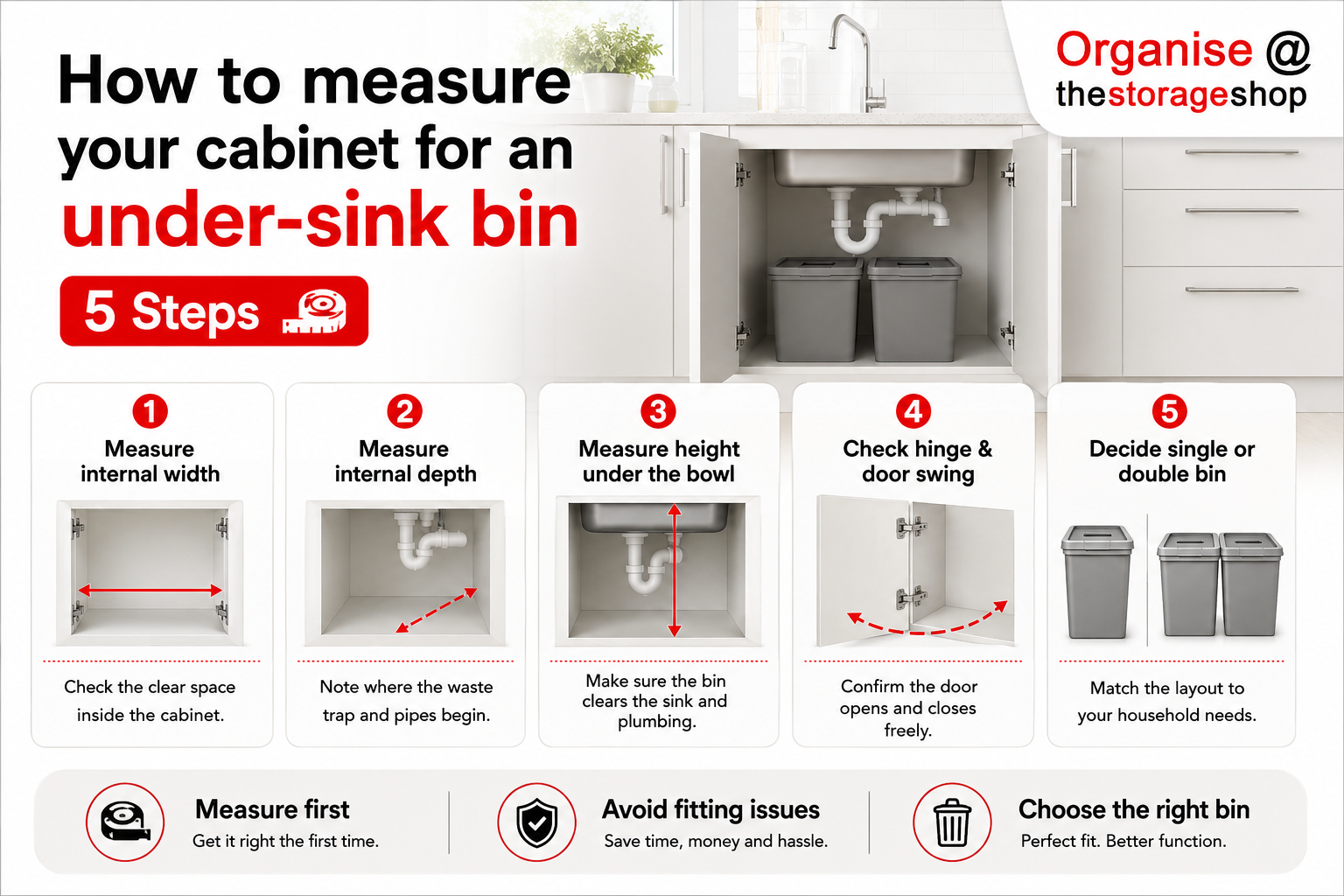
How to measure your cabinet for an under-sink bin (5 steps)
Five minutes with a tape measure saves you a return. Do it in this order:
- Measure the internal width. Open the doors and measure the clear opening between them — not the outside of the cabinet. Australian sink cabinets are usually 300, 400, 450, 500 or 600mm, but the usable opening is always a little less once you account for the cabinet walls and hinges.
- Measure the internal depth, then subtract for the trap. Run the tape from the front edge to the back wall, then note where the waste trap and pipes begin — that’s your real depth limit.
- Measure the height under the bowl. The sink bowl and pipework hang down into the cupboard. Measure the lowest point so a tall bin doesn’t foul on it as it slides out.
- Check the hinge type and door swing. Door-mounted bins need clearance to swing, and some hinges intrude into the opening. Make sure the door still closes fully with the bin fitted.
- Decide one bin or two. Separating recycling and food scraps means a double bin or two compartments, which usually pushes you toward a 450–600mm cabinet.
How to set up FOGO and recycling under your sink
With FOGO (Food Organics, Garden Organics) green-lid collection now offered by a growing number of Australian councils, more kitchens need three streams instead of one: general waste, recycling, and a food-scraps caddy. Under the sink, the cleanest way to manage this is a double pull-out — general waste one side, recycling the other — plus a small lidded caddy (on the benchtop or clipped to the door) that you tip into the green-lid bin every day or two. Exactly what belongs in each stream varies by council, so it’s worth checking your local rules before you settle on a layout.
Common mistakes to avoid
Most under sink bin regrets come down to a handful of avoidable errors:
- Measuring only the outside of the cabinet. Internal usable space is what counts — cabinet walls, hinges and plumbing all eat into it.
- Ignoring the plumbing. Check the trap and pipe positions before you buy; they’re the number-one reason a bin won’t slide out.
- Buying on litres alone. A 40L bin is useless if it won’t fit. Fit comes first, capacity second.
- Going too big or too small. Match the size to your household so waste neither overflows nor sits and sours.
- Forgetting recycling. If you sort daily, a single bin will frustrate you — plan for two compartments from the start.
- Overlooking door and hinge clearance. The bin needs room to open fully without catching the door, handle or hinges.
How to stop your under-sink bin from smelling
A closed cupboard traps odour, so a smelly under-sink bin gets noticed fast. A few habits fix it: choose a bin with a removable bucket you can lift out and rinse, use correctly sized liners so bags don’t slip and leak, drop a bicarb or activated-charcoal deodoriser in the base of the cupboard, empty food scraps daily into your FOGO or compost bin, and pick a sealed-lid pull-out so smells stay contained while the door’s shut.
Frequently asked questions
What size rubbish bin fits under a kitchen sink in Australia?
For most Australian kitchens, a 20–30L bin suits a 300–450mm cabinet, while a 40–64L double bin needs a 500–600mm cabinet. Because the waste trap steals depth, slimline and door-mounted bins often fit where a bulky freestanding bin won’t.
Are pull-out bins better than door-mounted bins?
Pull-out bins hold more and feel more convenient because the whole bin glides out to you, making them the better choice for everyday households. Door-mounted bins win when you rent, can’t drill into the cabinet, or have heavy pipework taking up the floor of the cupboard.
What’s the best under-sink bin for a 600mm cabinet?
A 600mm cabinet comfortably fits a double pull-out of around 64 litres, letting you run general waste and recycling together. The Wesco 64L Double Pull-Out Bin is a popular fit for this width.
How do I fit a bin around the pipes under my sink?
Measure the depth to where the waste trap begins and the height of the lowest pipe, then choose a bin that clears both. Door-mounted and slimline bins sit higher and clear pipework most easily, while pull-outs need enough floor depth in front of the trap.
Can I install a pull-out bin myself?
Yes — most base-mounted pull-outs screw to the cabinet floor with a few fixings and basic tools, and come with instructions. Soft-close drawer systems are more involved and are easiest to fit while the kitchen is being renovated.
Are under-sink bins good for apartments?
Yes — they save floor space and keep rubbish hidden, which matters most in compact kitchens. Compact single bins and door-mounted bins are especially useful where cabinet and floor space are tight.
Can I use an under-sink bin for recycling?
Yes. A double bin is the most practical option, with one bucket for general waste and the other for recycling, so both stay hidden inside one cabinet.
Do under-sink bins smell?
Any bin can smell if waste sits too long. Empty it regularly, rinse the bucket, use liners, and choose a sealed-lid design to keep odour down — especially helpful in warmer Australian climates.
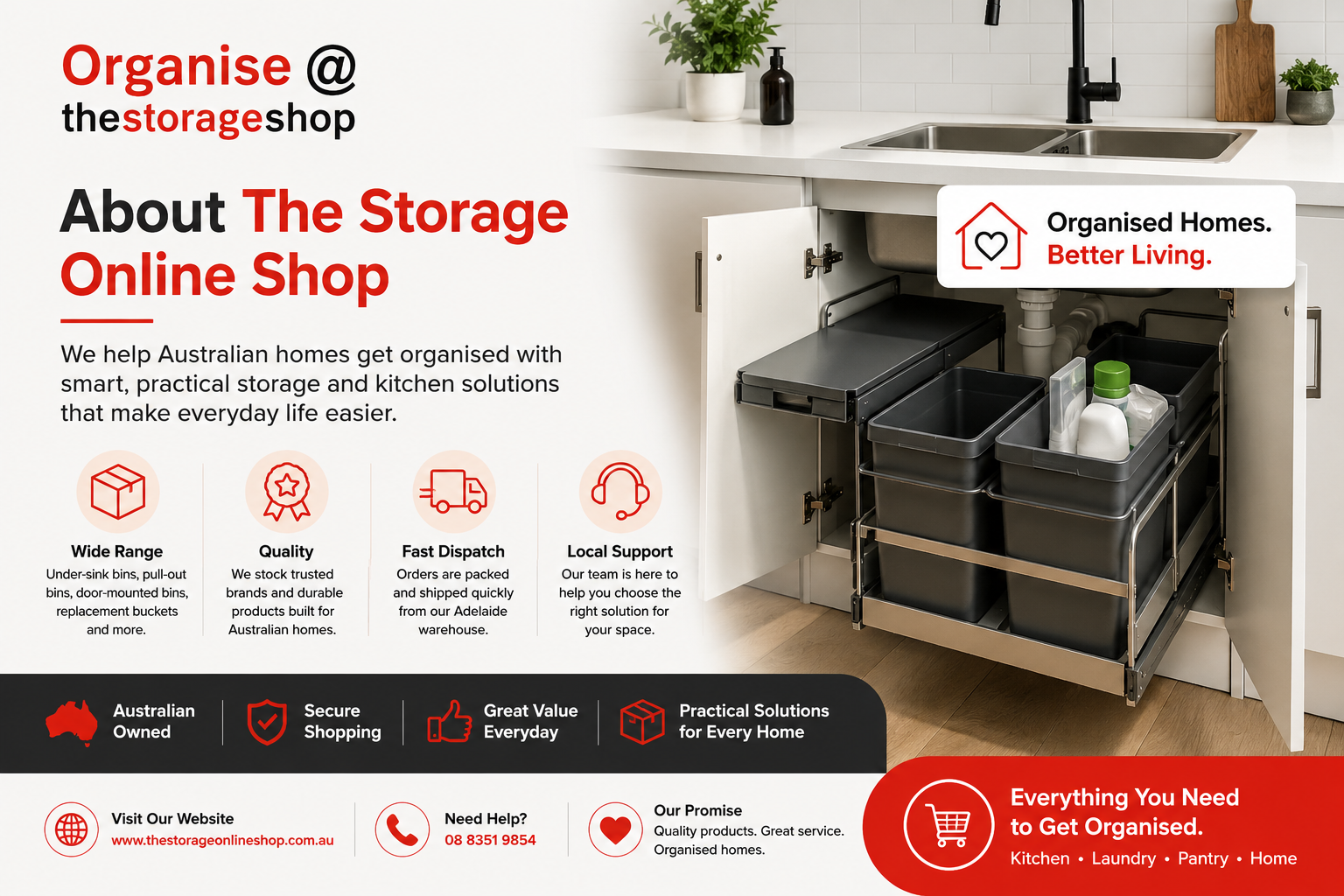
Why buy your kitchen bins from The Storage Online Shop?
Choosing a bin that actually fits your cabinet is far easier when you’re buying from people who specialise in it. We’re an Adelaide-based storage and organisation specialist, and kitchen bins are one of our core ranges — so we stock the sizes and configurations that suit real Australian cabinets, not just whatever happens to be on a generic shelf. A few reasons customers shop with us:
- Trusted brands — Wesco, Blum, Hailo, Brabantia and Hettich, chosen for fit and durability rather than price alone.
- A size for every cabinet — from compact 300mm door-mounted bins to 600mm double pull-outs.
- Replacement buckets and parts — refresh an existing system instead of replacing the whole thing.
- Australia-wide delivery — with free shipping on most orders over $200.
- Real help when you need it — get in touch if you’re not sure what will fit your cabinet, and we’ll point you to the right option.
The Storage Online Shop is an Adelaide-based storage specialist offering practical kitchen bin and home storage solutions for Australian households.
Final Recommendation: Which Under-Sink Bin Should You Choose?
If you rent or have a tight, heavily plumbed cupboard, start with a door-mounted or slimline bin. If you own your home and want the everyday convenience most households are after, a base-mounted pull-out — like the Wesco 64L Double — is the sweet spot. And if you’re renovating, a soft-close Blum drawer system is worth the spend. Whatever you choose, measure your cabinet first: the best under-sink bin isn’t the biggest one, it’s the one that fits your kitchen and suits your household.
Ready to choose the right under-sink rubbish bin for your kitchen? Browse The Storage Online Shop’s full kitchen bins range, including pull-out bins, under-sink bins, door-mounted bins, freestanding bins and replacement buckets for Australian homes.